HumanAISE: The 2nd Workshop on Human-Centered AI for Software Engineering
The Era of AI Where SE Meets Human Insight
Co-located with FSE'26 in Montreal, Canada
July 5, 2026
Organizing Committee
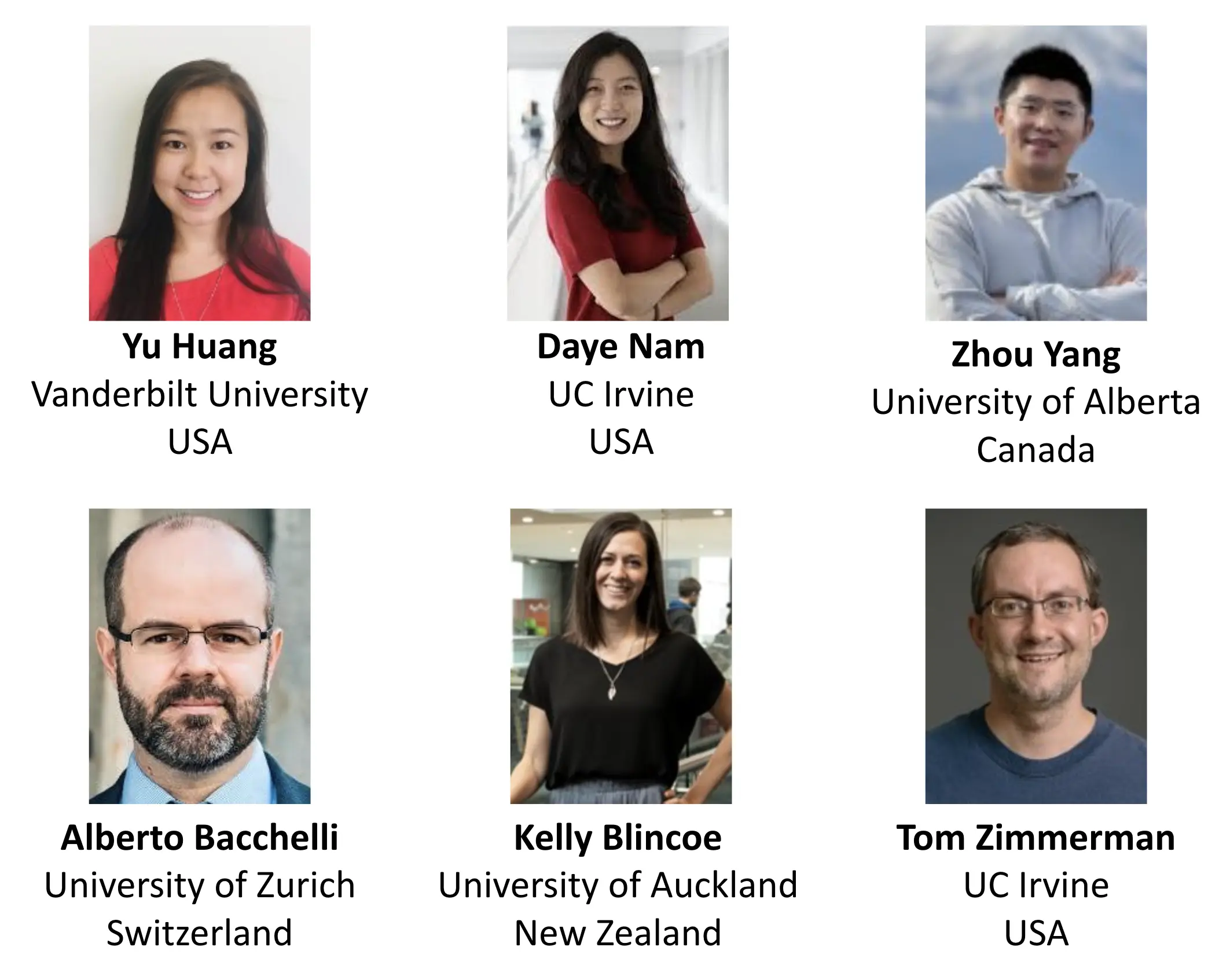
Yu Huang, Vanderbilt University, USA: yuhuang-lab.github.io (yu.huang@vanderbilt.edu)
Daye Nam, University of California, Irvine , USA: dayenam.com (daye.nam@uci.edu)
Zhou Yang, University of Alberta, Canada: apps.ualberta.ca/directory/person/zy25 (zy25@ualberta.ca)
Alberto Bacchelli, University of Zurich, Switzerland: sback.it/ (bacchelli@ifi.uzh.ch)
Kelly Blincoe, University of Auckland, New Zealand: kblincoe.github.io/ (k.blincoe@auckland.ac.nz)
Tom Zimmermann, University of California, Irvine, USA: thomas-zimmermann.com/ (tzimmer@uci.edu)

Steering Committee
Yu Huang, Vanderbilt University, USA: yuhuang-lab.github.io (yu.huang@vanderbilt.edu)
Tom Zimmermann, University of California, Irvine, USA: thomas-zimmermann.com/ (tzimmer@uci.edu)
Daniel Russo, Aalborg University, Denmark: danielrusso.org (daniel.russo@cs.aau.dk)
Tianyi Zhang, Purdue University, USA: tianyi-zhang.github.io (tianyi@purdue.edu)
David Lo, Singapore Management University, Singapore: www.mysmu.edu/faculty/davidlo (davidlo@smu.edu.sg)
John Grundy, Monash University, Australia: sites.google.com/site/johncgrundy (john.grundy@monash.edu)
Keynote by Chris Parnin
Principal Researcher at Microsoft
Same Brain, Superpowers: Programming in the Age of AI
Software developers today can move faster than ever before. A single engineer can now prototype systems that would have required a small team just a few years ago. But the brain doing that work is the same one we studied a decade ago.
Back then, we measured the cognitive state of programmers with EEG, fMRI, and eye-tracking devices. What we found was not superhuman productivity but something more fragile: debilitating stress in interviews so acute that developers couldn't access knowledge they actually had, code that overwhelms working memory before the programmer realizes it, and fatigue that degrades error detection while leaving confidence intact. Today, large language models have simultaneously disrupted software development and supercharged the individual developer. Teams building AI-powered products have been pushed out of their comfort zones—standard assumptions about testing, evaluation, and quality assurance no longer hold when software behavior is probabilistic and the input space is infinite. And yet: individual developers now move at a pace that once required entire teams.
Both are true at the same time. And both come with a cost. Building AI-powered software means living with new uncertainty: every test is effectively a flaky test, prompt engineering becomes fragile trial and error, agents loop and confidently announce they're done when they aren't. Early reports suggest that developers immersed in AI-assisted work are experiencing a new kind of exhaustion—one familiar to anyone who studies programmer cognition. The AI runs ahead. The brain is the same one we had yesterday.
Four problems remain unsolved. How do you evaluate software whose behavior is probabilistic? How do you calibrate trust in a system that is sometimes right for the wrong reasons? How do you prevent the cognitive atrophy that comes from delegating too much for too long? And how do you recognize brain fry before it's already happened?
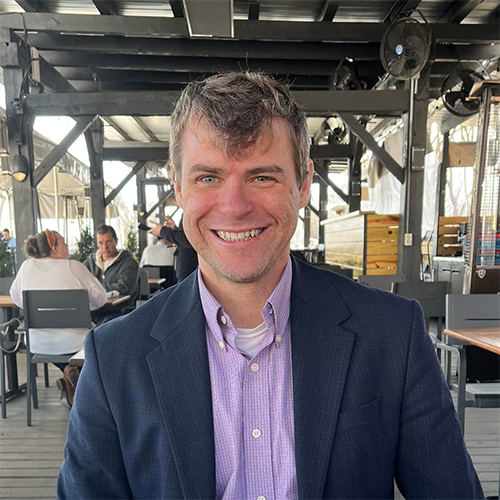
Bio: Dr. Chris Parnin's research spans developer productivity, cognition and learning, and automated infrastructure. He has published 100 papers, received five SIGSOFT Distinguished Paper Awards, a 10-Year Impact Paper Award, a Google Faculty Award, and an NSF CAREER Award. His work has been featured in hundreds of international news articles, magazines, and frequently discussed in industry forums.
Currently, Dr. Parnin leads research efforts at Microsoft focused on building and evaluating Copilots for Visual Studio and the Office Suite. His experience also includes serving as a tenured professor at NC State University, contributing to Microsoft Research's Human Interactions in Programming group, conducting field studies with ABB Research, and over a decade of professional programming in the defense industry.
Dr. Parnin has collaborated with industry partners to bridge research and practice, including developing mentorship programs for Stack Overflow, creating anxiety-reducing features for CoderPad, and advancing equitable hiring solutions with Byteboard. He also co-organized five Continuous Deployment Summits, hosted by leading companies such as Facebook, Netflix, Google, Microsoft, and Twitter. These summits fostered collaboration and innovation in continuous deployment practices, resulting in impactful publications and educational resources for students and professionals.
Our Mission
Our mission is to foster a human-centered approach to AI in software engineering, creating tools and methods that enhance, rather than replace, human creativity and decision-making. We are dedicated to advancing AI that aligns with human values, builds trust, and integrates seamlessly into developers' workflows.
Through collaboration among leading researchers, industry experts, and practitioners, we aim to explore how AI can support software engineers in a way that respects transparency, fairness, and ethical standards. Our focus is on developing AI techniques that not only improve productivity but also uphold the integrity of human involvement.
Our workshop is a platform for innovative discussions, where participants can share insights, address challenges, and envision AI advancements that place humans at the heart of software engineering. Together, we strive to shape a future where AI and human expertise work hand in hand to build responsible, effective SE practices.

Call for Papers
We are pleased to announce the Call for Papers for the 2nd Workshop on Human-Centered AI for Software Engineering (HumanAISE 2026), a platform for researchers and practitioners to present groundbreaking ideas in integrating human-centered AI into SE practices. Topics include explainable AI, ethical considerations, human-AI collaboration, and much more. Submissions will undergo a rigorous review process, and accepted papers will be published in the ACM Digital Library. Please see below for details on submission types, guidelines, and deadlines.
Call for Papers: HumanAISE 2026
The 2nd Workshop on Human-Centered AI for Software Engineering (HumanAISE 2026) invites submissions to explore how AI can enhance human capabilities while respecting workflows, building trust, and ensuring fairness in software engineering.
Topics of interest include, but are not limited to:
- Knowledge Transfer and Human-Guided AI for SE: Exploring how AI learns from human expertise and empowers developers with insights.
- Human-AI Interaction and Collaboration for SE: Developing models, workflows, and interfaces to enhance collaboration between developers and AI.
- Explainable AI for SE: Improving AI transparency and interpretability for software engineers.
- Ethics, Fairness, and Bias in AI-driven models for SE: Addressing biases in AI-driven tools and promoting ethical practices in SE.
- SE Training Education with AI: Leveraging AI-driven tools to enhance SE learning and education.
- SE Practices for AI: Enhancing the development and maintenance processes of AI systems.
- Evaluation of Human-AI Systems in SE: Designing evaluation methods to assess the long-term impact of Human-AI systems.
Submission Guidelines
We welcome three types of submissions:
- Full Papers: Up to 8 pages, plus 2 additional pages for references, presenting completed research with significant findings.
- Short Papers: Up to 4 pages, plus 1 additional page for references, highlighting early-stage or ongoing research with innovative ideas.
- Position Papers: Up to 2 pages, including references, proposing bold, high-risk, high-reward ideas.
- (new) Extended Abstracts: Limited to 5 pages or less, free of Article Processing Charges (APC).
Submission Link: https://humanaise2026.hotcrp.com/. Submissions must adhere to the FSE 2026 two-column industry track format. Detailed formatting guidelines can be found at the FSE 2026 - How to Submit page. Submissions must include references within the page limits and will undergo a double-blind review process by at least three program committee members.
Accepted papers will be published in the ACM Digital Library as part of the FSE 2026 companion proceedings. Authors must ensure their submissions comply with ACM formatting guidelines. At least one author of each accepted paper must register and present at the workshop.
Key Deadlines:
- Submission Deadline:Thursday, February 12, 2026
- Notification of Acceptance:Thursday, March 19, 2026
- Camera Ready:Thursday, April 9, 2026 AoE
Program Committee
We are honored to have the following experts serve on our Program Committee:
Yintong Huo, Singapore Management University;
Kang Hong Jin, University of Sydney;
Neil Ernst, University of Victoria;
Bianca Trinkenreich, Colorado State University;
Jin Guo, McGill University;
Toby Li, Notre Dame University;
Brittany Johnson-Matthews, George Mason University;
Ting Zhang, Monash University;
Sebastian Baltes, Heidelberg University;
Sarah D'Angelo, Google;
Igor Steinmacher, Northern Arizona University;
Kevin Moran, University of Central Florida;
Chenglong Wang, Microsoft Research;
Miryung Kim, UCLA;
Yangruibo (Robin) Ding, Amazon;
Nimmi Weeraddana, University of Calgary;
Ronnie de Souza Santos, University of Calgary;
Majeed Kazemitabaar, University of Alberta, Alberta Machine Intelligence Institute;
Ze Shi Li, University of Oklahoma;
Shaowei Wang, University of Manitoba;
Yuan Tian, Queen's University;
Silvia Abrahão, Universitat Politècnica de València;
Victoria Jackson, University of Southhampton;
Fabio Calefato, University of Bari;
Nathan Cassee, University of Victoria;
Davide Rossi, University of Bologna;
Zhenpeng Chen, Tsinghua University;
Jieke Shi, Singapore Management University;
Jiakun Liu, Harbin Institute of Technology;
Ratnadira Widyasari, University of Victoria;
Chao Peng, Bytedance;
HumanAISE 2026 Program
| Time | Activity |
|---|---|
| 9:00 am – 9:10 am | Opening |
| 9:10 am – 10:00 am | Keynote and Q&A with Chris Parnin (Principal Researcher at Microsoft) |
| 10:00 am – 10:30 am | Networking & Discussion |
| 10:30 am – 11:00 am | Morning Coffee Break |
| 11:00 am – 12:30 pm |
Session One: Human Trust, Reliance, and Control in AI-Assisted Software Engineering
Discussion & Exercise (60 min) |
| 12:30 pm – 14:00 pm | Lunch |
| 14:00 pm – 15:30 pm |
Session Two: Cognition and AI-Augmented Developer Workflows
Discussion & Exercise (55 min) |
| 15:30 pm – 16:00 pm | Afternoon Coffee Break |
| 16:00 pm – 17:30 pm |
Session Three: Fairness, Ethics, and Social Dimensions of AI in Software Engineering
Discussion & Exercise (65 min) |
| 17:30 pm – 18:00 pm | Discussion & Closing |
Web Chair & Publicity Chair
Responsible for overseeing the workshop’s online presence and external outreach:
Zach Karas (Web Chair & Publicity Chair), Ph.D. Student at Vanderbilt University, USA — zachkaras.com
Past HumanAISE Workshops